Sign in. It’s quick, free and it’s up to you.
An account is an optional way to support the work we do. Find out more.
Sign in. It’s quick, free and it’s up to you.
An account is an optional way to support the work we do. Find out more.
BUDGET DAY BROUGHT a raft of announcements on tax, spending and supports for households, as money ministers Simon Harris and Jack Chambers outlined the government’s plans for the coming year.
But if you listened closely enough, some of the measures included in the finance and public expenditure ministers’ speeches today might have sounded familiar.
There were plenty of new items in today’s budget, but there were a few instances where what was outlined had been announced before.
An entire section of Harris’s speech referred to the introduction of the Derelict Property Tax, which will replace the Derelict Sites Levy.
This new tax, which will encourage property owners to redevelop derelict properties or sell them to someone who will, was not only announced during last year’s budget, but was brought before cabinet in June of this year.
In fairness to the Tánaiste, he said in his speech that this measure was announced last year.
The only new details appear to be the confirmation that the tax will be charged at 7% – the same rate as the current levy – and that the first registers of dereliction will be published on 1 September 2027.
Chambers’s speech highlighted a need to invest in energy infrastructure as part of reducing the cost of living.
He announced a €654.5 million package for residential and community energy upgrade schemes from the Sustainable Energy Authority of Ireland (SEAI), noting that this would include a boiler scrappage scheme.
The €2,000 scheme was flagged last month, and formally announced by Minister for Environment Darragh O’Brien last week.
In one of the more low-key budget measures, Harris announced investment in Ireland’s energy grid to speed up the State’s ability to rely on renewable energy sources.
He outlined how the government invested €1.5 billion in the ESB last year to help finance the investment required to “increase capacity and integrate renewable energy”.
And building on this, he said that a further €2 billion would be invested by Eirgrid in the coming years to boost the resilience of the grid as we switch to renewables.
Both of these figures were already outlined in July, when the government unveiled details of the revised National Development Plan.
Once again, O’Brien specifically welcomed the Eirgrid announcement in his own press release at the time.
“This €3.5 billion investment is about building the energy infrastructure that Ireland needs for the future,” he said.
Similarly, the allocation of €200 million to the Shared Island Fund was earmarked as allowing for the completion of various projects.
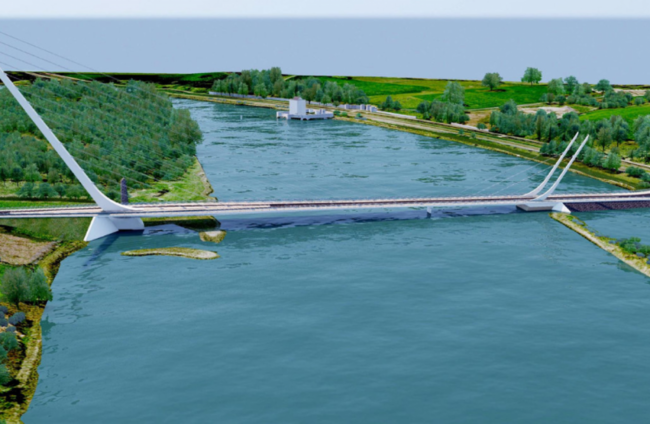
One of these was the Narrow Water Bridge, which will link the Cooley Peninsula to the Mourne Mountains, but construction began in 2024 and was always expected to be completed next year.
Chambers also said the fund would help with the commencement of a new teaching building at Ulster University and phase three of the Ulster Canal restoration
A €44.5 million commitment to Ulster University for the building dates to 2023, while an allocation for phase three of the Ulster Canal under the Shared Island Fund was announced in June.

To embed this post, copy the code below on your site















have your say